
Introduction
Have you ever wondered why Vedic astrology traditionally recognizes 27 Nakshatras when some ancient Indian traditions mention 28? The answer leads us to Abhijit, a lesser-known celestial division associated with victory, auspiciousness, and the history of Indian astronomy.
The story of Abhijit Nakshatra is one of the most fascinating subjects in Vedic astrology. It connects ancient observations of the night sky with the lunar mansions used in astrology today.
But was Abhijit really removed from the Nakshatra system? Or did it become less prominent as astronomical and astrological traditions developed?
Let’s explore the history, meaning, and traditional significance of the forgotten 28th Nakshatra.
What Are Nakshatras in Vedic Astrology?
In Vedic astrology, Nakshatras are divisions of the zodiac associated with the Moon’s apparent journey across the sky. They are also known as lunar mansions.
The traditional system commonly used today contains 27 Nakshatras. Each Nakshatra covers 13 degrees and 20 minutes of the zodiac, creating a complete circle of 360 degrees.
These lunar mansions are important in Jyotish because the Moon’s position at the time of birth is used to determine a person’s Janma Nakshatra, or birth star.
Astrologers traditionally use Nakshatras to interpret personality characteristics, emotional tendencies, relationship themes, and planetary periods.
However, the history of Nakshatras is more complex than the familiar list of 27 names suggests.
The Mystery of the 28th Nakshatra
Ancient Indian astronomical and astrological traditions contain references to a system of 28 lunar mansions. One of the names associated with this system is Abhijit.
The word “Abhijit” is generally associated with victory, triumph, or one who conquers. Its meaning gives it a special place in traditional Indian symbolism.
Unlike the 27 Nakshatras commonly used in modern Vedic astrology, Abhijit is not usually included as a separate equal division in the standard zodiac calculation.
This raises an interesting question: Why do many contemporary systems use 27 Nakshatras instead of 28?
To understand this, we need to look at the relationship between lunar cycles, astronomical divisions, and the development of Indian astrology.
Why Did Ancient Traditions Use 28 Nakshatras?
The number 28 has an important connection with lunar timekeeping. A lunar month is approximately 29.5 solar days, while the Moon’s sidereal orbital period is approximately 27.3 days.
Ancient sky-watchers observed the Moon’s movement against the background of stars and developed systems for organizing its journey.
Different historical traditions used different divisions and classifications. The 28-Nakshatra framework is associated with one such traditional arrangement.
The 27-Nakshatra system became especially important because it divides the zodiac into 27 equal sections. Each section measures 13 degrees and 20 minutes.
This mathematical division allows astrologers to assign planetary positions and birth-star calculations consistently across the zodiac.
It is important to remember that the 27-Nakshatra system did not necessarily replace a single universal 28-Nakshatra system through one clearly documented historical event. The development of these traditions was gradual and varied across texts and practices.
Who Was Abhijit Nakshatra?
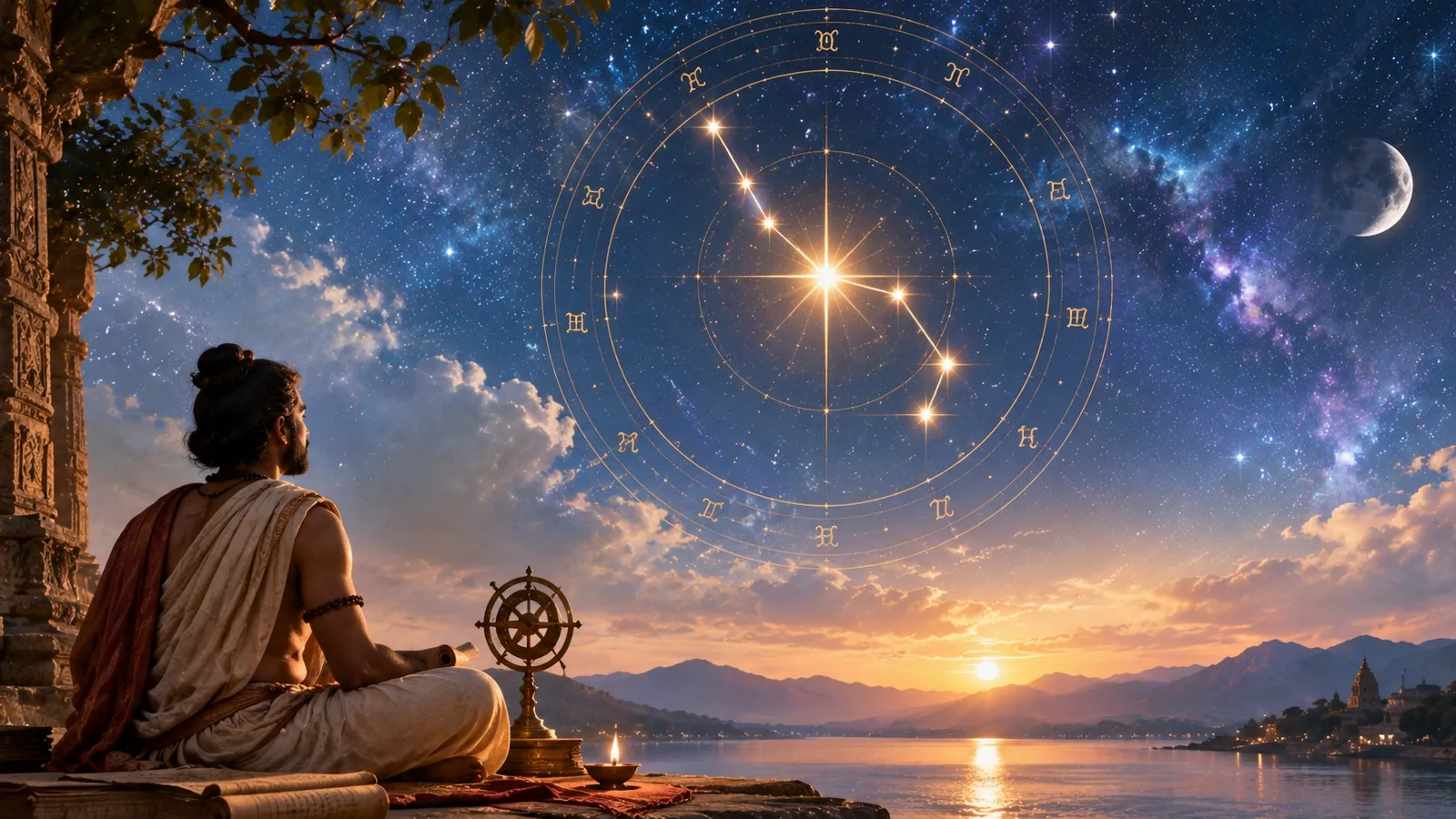
Abhijit is a traditional celestial designation that appears in discussions of the Nakshatra system and Indian astronomy.
Its name carries the meaning of victory or triumph, which explains why it is often connected with auspiciousness and success in traditional interpretations.
Some traditional accounts associate Abhijit with the bright star Vega, although the identification and boundaries of Abhijit are not identical across every historical source.
This distinction matters because a Nakshatra is not simply the same thing as a modern astronomical constellation or a single star. It can represent a traditional division of the sky, a symbolic category, or a celestial reference depending on the source.
The history of Abhijit therefore requires both astronomical and textual context.
Abhijit and the Star Vega
One of the most interesting facts associated with Abhijit Nakshatra is its traditional connection with Vega.
Vega is a bright star in the constellation Lyra. It is one of the most recognizable stars in the northern sky and has been important in various astronomical traditions.
In some Indian traditions, Abhijit is linked with Vega. However, this identification should not be treated as a universally agreed modern astronomical boundary for the Nakshatra.
Ancient Indian astronomy used observations of stars and planetary movements to develop calendars, timekeeping systems, and celestial classifications.
The association between Abhijit and Vega provides an opportunity to explore how traditional Indian sky knowledge and modern astronomy can be studied together.
Why Is Abhijit Missing From the Common List of 27 Nakshatras?
The most common explanation involves the mathematical organization of the zodiac.
The standard 27 Nakshatras divide the 360-degree zodiac into equal sections:
360 ÷ 27 = 13 degrees and 20 minutes per Nakshatra.
This arrangement is convenient for calculations involving the Moon, planetary positions, and the traditional Nakshatra-based astrological system.
Abhijit, however, is not generally treated as one of these 27 equal divisions in contemporary Vedic astrology.
Some historical and specialized traditions preserve references to Abhijit, while many modern practitioners focus on the 27-Nakshatra framework.
Therefore, it is more accurate to say that Abhijit has a distinct place in the history of Indian celestial traditions rather than claiming that it was simply deleted from astrology.
The Difference Between 27 and 28 Nakshatras
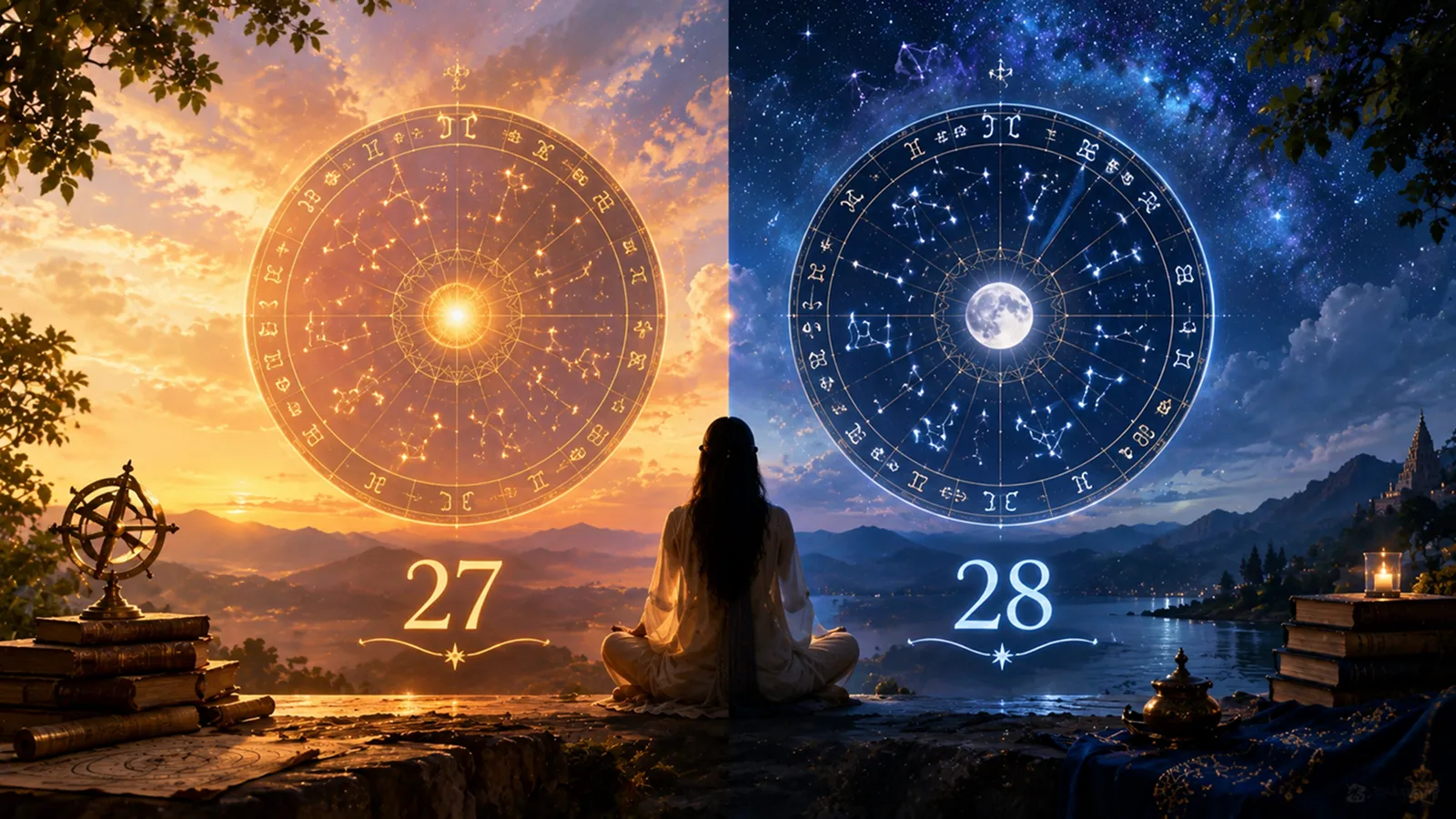
Understanding the difference between the two systems makes the subject easier to appreciate.
The 27-Nakshatra System
The 27-Nakshatra system is widely used in contemporary Vedic astrology.
Each Nakshatra occupies 13 degrees and 20 minutes of the zodiac. The system supports calculations related to birth stars, planetary periods, and traditional astrological interpretations.
The 27 Nakshatras are further divided into four Padas, or quarters, giving a total of 108 Padas.
This division is significant in traditional Jyotish because it connects Nakshatras with other symbolic and astrological frameworks.
The 28-Nakshatra Tradition
The 28-Nakshatra tradition includes Abhijit in addition to the commonly recognized lunar mansions.
However, historical descriptions of the 28-Nakshatra system are not necessarily identical in their organization, boundaries, or applications.
Abhijit may be discussed in relation to traditional astronomy, celestial symbolism, or specialized astrological calculations.
The existence of these variations shows that Indian astrology developed through multiple traditions rather than following one unchanging system throughout history.
Abhijit Nakshatra vs Abhijit Muhurat
- A common source of confusion is the similarity between Abhijit Nakshatra and Abhijit Muhurat.
- Although their names are connected, they refer to different concepts.
- Abhijit Nakshatra is a traditional celestial designation associated with the history of the lunar mansion system.
- Abhijit Muhurat is an auspicious period of time traditionally associated with the middle portion of the day.
- Abhijit Muhurat is commonly discussed in Panchang traditions and is associated with auspicious activities.
- The two should not be treated as interchangeable. One concerns a celestial designation, while the other concerns a time period used in traditional calendrical practice.
What Is Abhijit Muhurat?
Abhijit Muhurat is traditionally associated with a favorable period around midday.
In many Panchang traditions, it is calculated in relation to local sunrise and sunset. Its exact timing can therefore vary according to location and the length of the day.
The traditional significance of Abhijit Muhurat is linked with auspiciousness and the symbolism of victory.
People may consult a Panchang to identify this period for certain activities. However, it is important to distinguish traditional beliefs about auspicious timing from scientifically established effects on the outcome of an event.
The connection between Abhijit’s name and victory makes Abhijit Muhurat an interesting subject for readers exploring Indian astrology and cultural traditions.
The Symbolism of Victory in Abhijit
The meaning of Abhijit adds a symbolic layer to its history.
In traditional interpretations, victory is not limited to defeating an opponent. It can also represent overcoming difficulties, completing an important task, or moving forward with determination.
This symbolism is one reason Abhijit attracts interest among students of Vedic astrology.
However, interpretations of Abhijit can differ depending on the tradition, text, or astrologer. There is no single universally accepted modern interpretation of every aspect associated with it.
For readers, this makes Abhijit an opportunity to explore the diversity of traditional astrological symbolism.
How Ancient Indian Astronomy Influenced Astrology
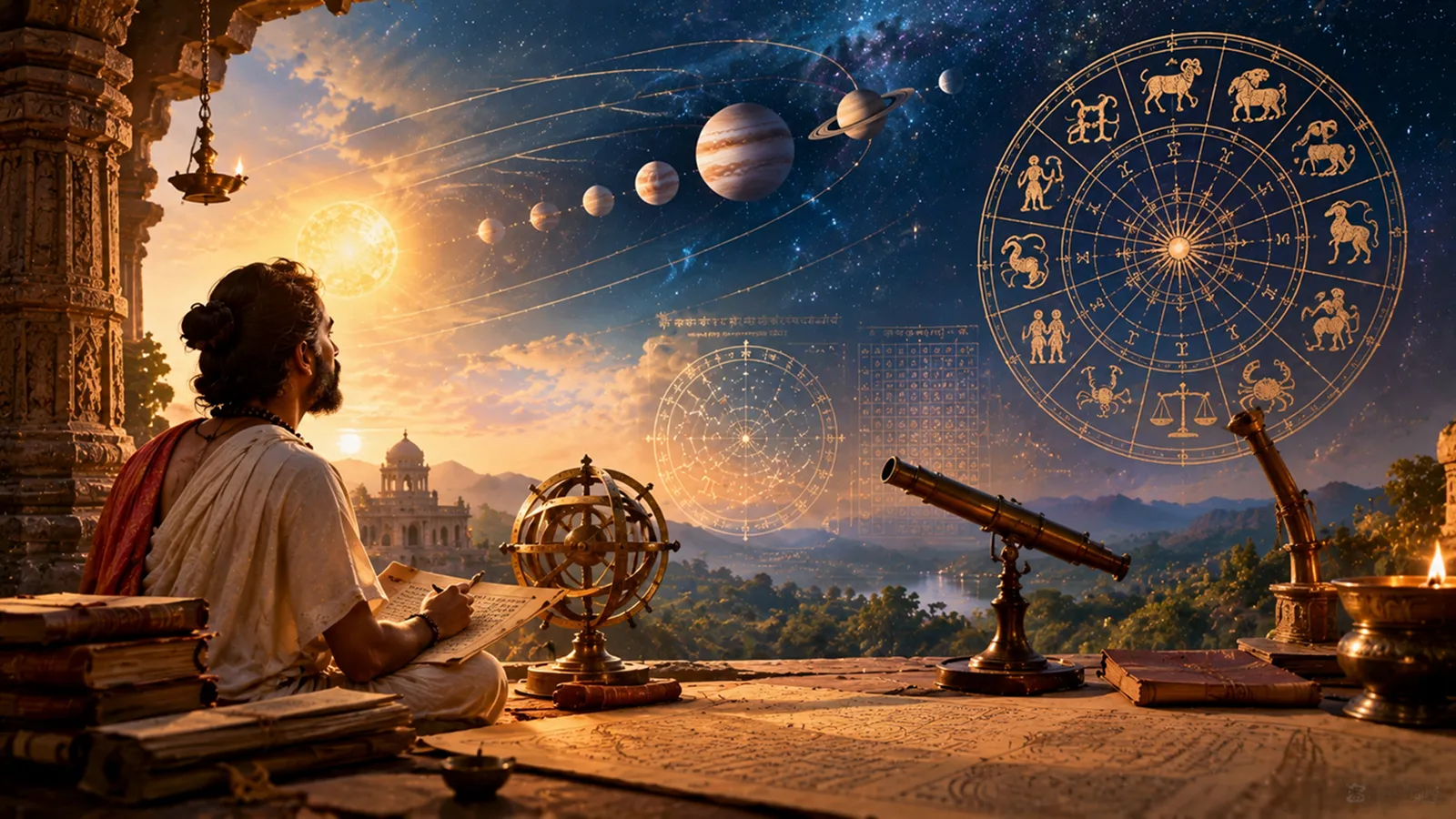
The history of Nakshatras cannot be separated completely from the history of astronomy in India.
Ancient Indian scholars studied the movements of the Sun, Moon, planets, and stars. Their observations contributed to systems of calendrical calculation and the organization of celestial time.
Texts associated with Indian astronomy and Jyotisha describe methods for understanding celestial cycles and calculating planetary positions.
Over time, different traditions developed their own classifications, mathematical approaches, and interpretations.
The Nakshatra system reflects this long history of observing the sky and organizing celestial information.
Abhijit is especially interesting because it reminds us that the traditional lunar mansion framework has not always been represented in exactly the same way.
Is Abhijit Still Used in Vedic Astrology?
Abhijit is still discussed in certain traditional and specialized contexts, but it is not generally treated as a separate equal Nakshatra in the standard 27-Nakshatra system used by many contemporary Vedic astrologers.
Its presence in historical discussions demonstrates that the Nakshatra tradition has multiple layers.
Some astrologers may study Abhijit as part of traditional literature or specialized calculations. Others primarily use the 27 Nakshatras for birth-chart interpretation.
If you are learning Vedic astrology, it is useful to understand the standard 27 Nakshatras first and then explore the historical role of Abhijit.
This approach helps distinguish widely used contemporary practice from specialized or historical traditions.
Why This Forgotten Nakshatra Still Matters
The story of Abhijit is not just about a missing name from a list.
It reveals how ancient Indian traditions organized the night sky, how mathematical divisions shaped astronomical systems, and how astrology developed over time.
It also encourages readers to look beyond simplified explanations of Vedic astrology.
The history of the 27 and 28 Nakshatra traditions shows that celestial knowledge can contain multiple classifications and interpretations.
For students of astrology, Abhijit offers a fascinating example of how mythology, astronomy, language, and traditional symbolism can come together.
Final Thoughts
The mystery of Abhijit Nakshatra opens a fascinating chapter in the history of Vedic astrology.
While 27 Nakshatras are widely used in contemporary Jyotish, traditional references to 28 lunar mansions show that the organization of the celestial sky has a rich and varied history.
Abhijit’s association with victory, its connection with traditional astronomy, and its relationship to the Nakshatra system make it a compelling subject for anyone interested in Indian astrology.
At Astro Solution, exploring these lesser-known aspects of Vedic astrology can help readers discover the depth of India’s celestial traditions and develop a better understanding of the concepts behind their birth charts.
Whether you are beginning your astrology journey or studying advanced Jyotish, the story of Abhijit reminds us that the night sky has inspired questions, calculations, and traditions for thousands of years.
Questions readers usually ask next.
1. Was Abhijit the 28th Nakshatra?
Abhijit is associated with traditional 28-Nakshatra classifications. However, historical systems varied, and it is not generally counted as a separate equal division in the standard 27-Nakshatra system used today.
2. Why are there 27 Nakshatras in modern Vedic astrology?
The 27-Nakshatra system divides the zodiac into 27 equal sections of 13 degrees and 20 minutes. This arrangement supports traditional lunar and planetary calculations.
3. Is Abhijit Nakshatra connected with Vega?
Some traditional interpretations associate Abhijit with Vega, a bright star in the constellation Lyra. The precise identification and boundaries depend on the historical tradition being discussed.
4. What does the name Abhijit mean?
Abhijit is generally associated with victory, triumph, or overcoming obstacles.
5. Is Abhijit Muhurat the same as Abhijit Nakshatra?
No. Abhijit Nakshatra is a traditional celestial designation, while Abhijit Muhurat refers to an auspicious time period traditionally calculated around midday.
6. Can Abhijit be used in a modern Kundli reading?
The standard 27-Nakshatra framework is commonly used for contemporary Kundli analysis. Abhijit may be studied in specialized or historical contexts, depending on the astrologer’s tradition.
7. What is the connection between Nakshatras and the Moon?
Nakshatras are lunar mansions associated with the Moon’s apparent movement through the zodiac. In Vedic astrology, the Moon’s birth position is used to determine the Janma Nakshatra.
Discussion
Discussion
Approved reader questions and editorial replies appear here after review.