
In Hindu tradition, Tuesday is considered an auspicious day for worshipping Lord Hanuman, also known as Bajrang Bali. Devotees pray to Hanuman Ji for courage, strength, discipline, protection, and peace of mind. In Vedic astrology, Tuesday is associated with Mars, known as Mangal Graha, which represents energy, confidence, determination, and action.
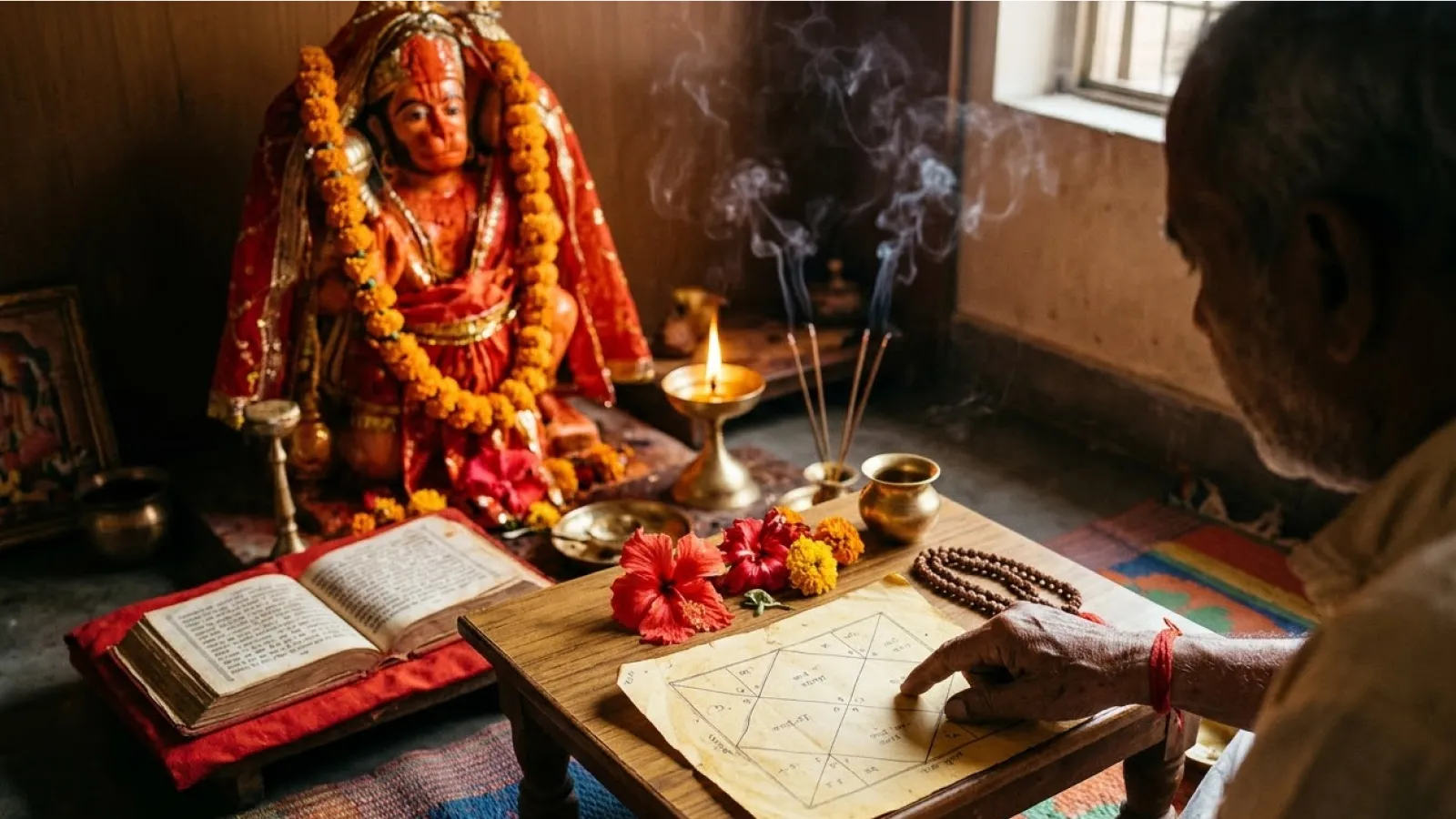
The connection between Hanuman Ji and Vedic astrology is especially relevant when discussing Mars placement in a birth chart, Mangal Dosha, and traditional planetary remedies. Many devotees observe Tuesday fasts, recite the Hanuman Chalisa, and chant Hanuman mantras as part of their spiritual practices.
In this guide, we explore the traditional significance of Hanuman Ji in Vedic astrology, the role of Mars in a horoscope, and the spiritual practices associated with Tuesday worship.
Why Is Tuesday Associated with Hanuman Ji?
Tuesday, also called Mangalwar, holds special significance for devotees of Lord Hanuman. According to Hindu tradition, worshipping Hanuman Ji on this day is associated with courage, devotion, self-control, and inner strength.
In Vedic astrology, Tuesday is linked with Mars, or Mangal Graha. Mars symbolizes energy, ambition, leadership, confidence, and the ability to overcome challenges. When interpreted in a birth chart, its placement is traditionally considered while assessing a person's temperament, drive, and approach to difficult situations.
For this reason, Tuesday worship is often connected with prayers for strength, discipline, and the ability to manage anger or impulsive behavior.
Hanuman Ji in Vedic Astrology: Understanding the Connection
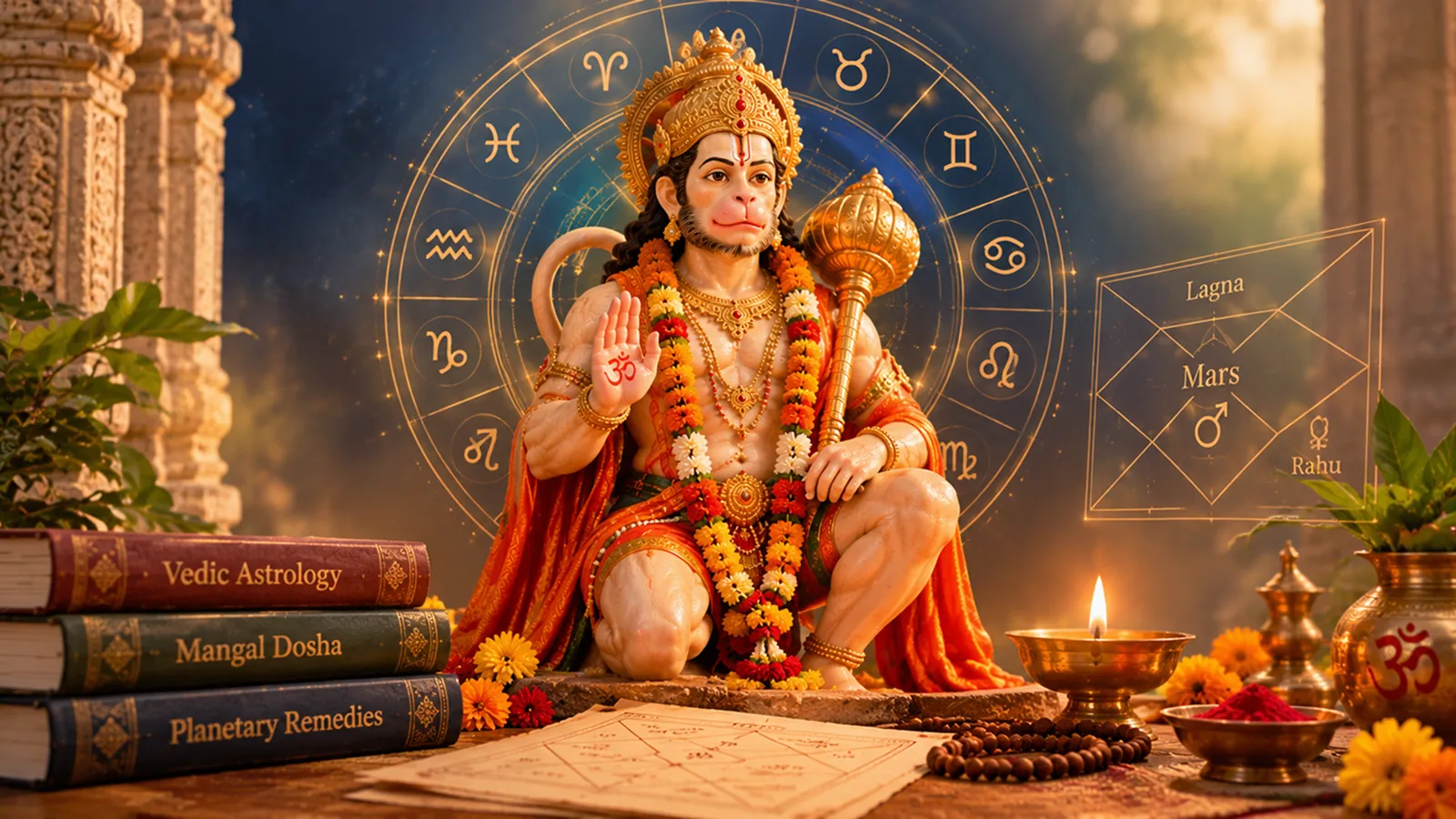
The connection between Hanuman Ji and Vedic astrology comes from religious traditions that associate his worship with courage, protection, devotion, and overcoming obstacles. Some astrological traditions recommend Hanuman worship as a spiritual practice for people concerned about challenging Mars placements or Mangal Dosha.
It is important to understand that these practices are based on traditional religious and astrological beliefs. Worship does not guarantee a change in planetary positions or specific life outcomes.
The spiritual significance of Hanuman Ji's worship can be understood through three important themes:
- Courage and confidence: Devotion to Hanuman Ji is traditionally associated with developing bravery and determination.
- Discipline and self-control: Regular prayer and recitation can provide a structured spiritual routine.
- Strength during challenges: Many devotees turn to Hanuman Ji for faith and emotional reassurance during difficult periods.
1. Mars Planet in Astrology and Its Significance
Mars is known as Mangal Graha in Vedic astrology. It is associated with energy, courage, ambition, physical vitality, initiative, and determination.
Astrologers examine Mars's sign, house, aspects, conjunctions, and other chart factors to interpret its potential influence within a horoscope.
A well-supported Mars is traditionally associated with qualities such as confidence, initiative, and leadership. A challenging Mars placement may be interpreted as symbolizing impatience, impulsiveness, conflict, or difficulty managing anger.
These interpretations belong to astrological tradition and are not scientifically established predictions of personality or future events.
2. What Is Mangal Dosha in Kundli?
Mangal Dosha, also called Manglik Dosha, is a concept in Vedic astrology associated with the placement of Mars in particular houses of a birth chart. The specific houses and calculation methods can vary across astrological traditions.
Some astrologers consider Mangal Dosha when discussing marriage compatibility, relationship harmony, and traditional Kundli matching.
However, Mangal Dosha should not be treated as a guarantee of marital difficulties or an unsuccessful relationship. Compatibility involves many practical factors, including communication, mutual respect, shared values, and emotional understanding.
People who follow Vedic astrology may choose to consult an experienced astrologer to understand their chart and learn about traditional remedies.
3. Understanding Mars Placement in a Birth Chart
Mars placement in a birth chart is one of the factors astrologers examine when interpreting a person's energy, ambition, confidence, and approach to challenges.
The interpretation may depend on several elements:
- House placement: The area of life associated with Mars in the horoscope.
- Zodiac sign: The sign in which Mars is positioned.
- Planetary aspects: Relationships between Mars and other planets.
- Conjunctions: Other planets placed with Mars.
- Dasha periods: Planetary periods used in Vedic astrology to interpret different phases of life.
An astrologer generally considers the complete birth chart rather than drawing conclusions from Mars alone. A single placement is not enough to determine a person's personality, marriage prospects, career success, or future.
4. What Does Weak Mars in a Horoscope Mean?
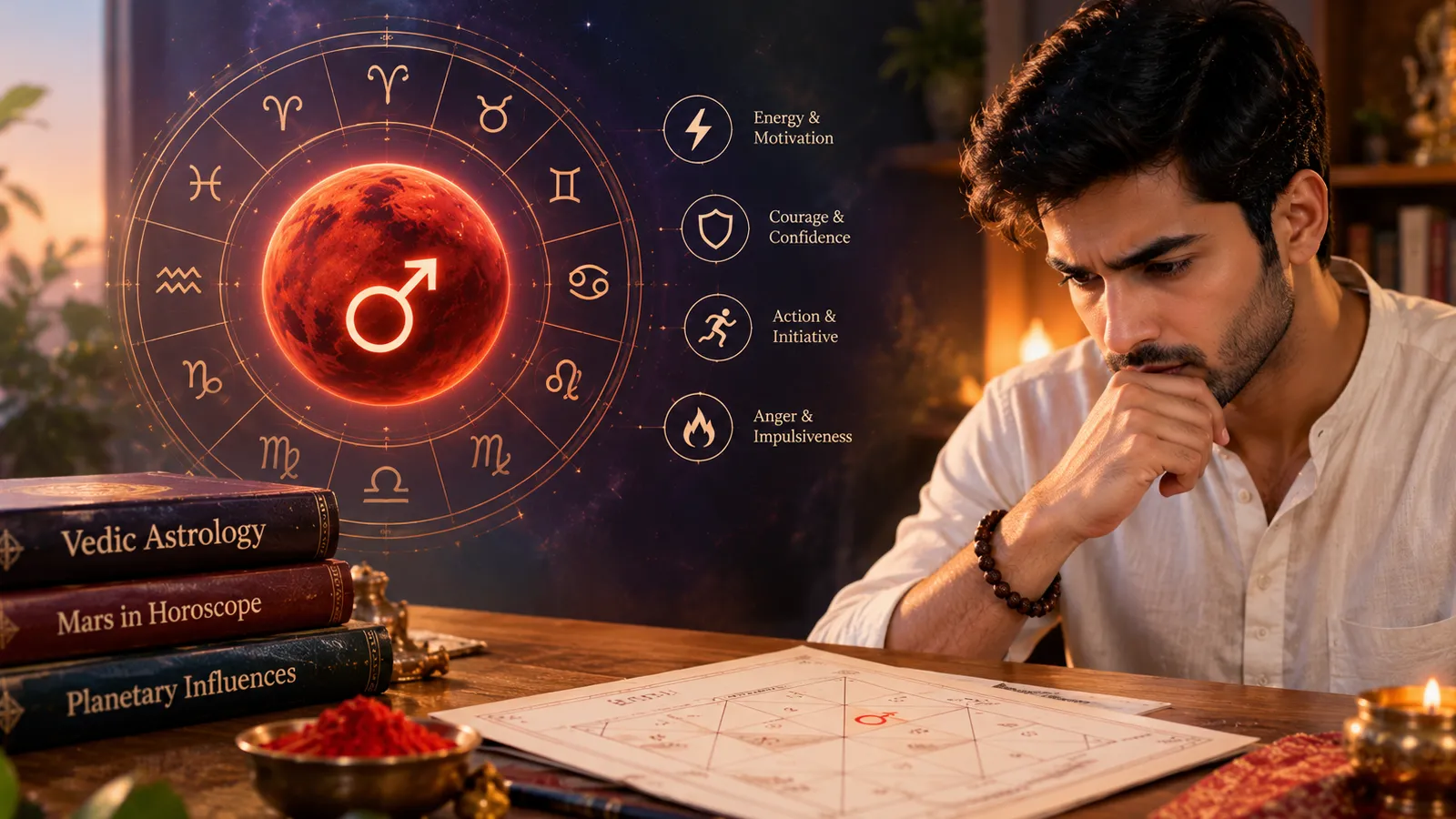
Traditional interpretations sometimes associate challenging Mars placements with impatience, frustration, impulsive decisions, or difficulties managing disagreements. Other placements may be interpreted as supporting courage, action, and determination.
People interested in astrological guidance can use a birth chart reading to explore these traditional interpretations. At the same time, practical habits such as emotional regulation, regular physical activity, thoughtful communication, and decision-making can help people manage everyday challenges.
5. Traditional Mars Remedies in Vedic Astrology
Mars remedies in Vedic astrology often include prayers, mantra recitation, charitable acts, and spiritual observances. Devotees may practise these rituals on Tuesday because of its association with Mangal Graha.
Common traditional practices include:
Reciting the Hanuman Chalisa: Many devotees recite the Hanuman Chalisa on Tuesdays as an expression of faith and devotion.
Chanting Hanuman mantras: Devotees may chant a Hanuman mantra with concentration and sincerity as part of their daily or weekly spiritual routine.
Observing a Tuesday fast: Some people observe a fast according to their religious customs, personal health needs, and family traditions.
Practising charity and service: Donating food or helping people in need can be incorporated into a meaningful spiritual practice.
Developing patience and self-control: Managing anger, avoiding impulsive reactions, and acting responsibly reflect the qualities devotees often associate with Hanuman Ji.
These practices are matters of religious faith and should not be presented as guaranteed ways to change planetary effects.
6. Mangal Dosha Remedies and the Role of Hanuman Ji Worship
Hanuman Ji worship is among the spiritual practices some Vedic astrology traditions recommend to people concerned about Mangal Dosha.
Commonly observed practices include:
- Visiting a Hanuman temple on Tuesday.
- Reciting the Hanuman Chalisa.
- Offering prayers with devotion.
- Chanting traditional Hanuman mantras.
- Performing acts of charity and service.
- Seeking an individualized Kundli interpretation rather than relying on a single astrological factor.
Practices differ by region, family tradition, and astrological school. Not every person with a Mars placement considered challenging needs to follow the same rituals.
Marriage decisions should never be based solely on Mangal Dosha. Mutual understanding, consent, compatibility, and the quality of the relationship remain essential.
7. How to Worship Hanuman Ji on Tuesday
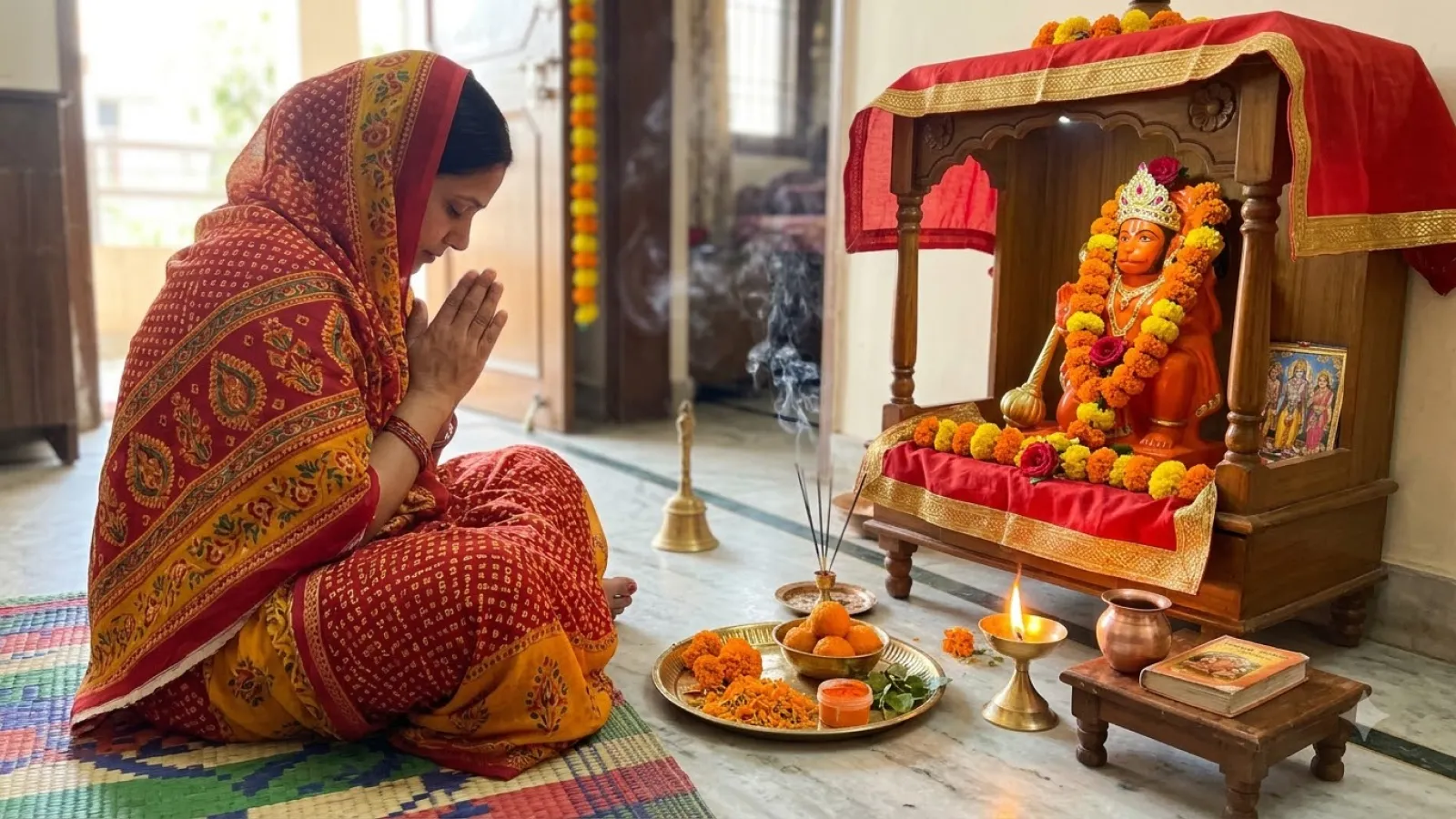
- Begin the day with personal cleanliness and a calm mind.
- Visit a Hanuman temple or arrange a clean place for prayer at home.
- Offer flowers or other customary offerings according to your tradition.
- Recite the Hanuman Chalisa or a familiar Hanuman mantra.
- Spend a few moments reflecting on courage, humility, discipline, and service.
- Help someone in need or perform a kind act during the day.
There is no need to make expensive offerings or feel pressured to purchase special rituals. Sincere devotion and responsible conduct are central to many Hindu devotional practices.
Conclusion
The relationship between Hanuman Ji in Vedic astrology and Mars, or Mangal Graha, is an important topic for devotees interested in traditional astrology. Tuesday worship is commonly associated with courage, confidence, devotion, and self-discipline, while Mars placement and Mangal Dosha are interpreted through the principles of Vedic astrology.
Reciting the Hanuman Chalisa, chanting mantras, observing customary prayers, and practising charity can be meaningful spiritual activities for devotees. These traditions may provide personal comfort and a sense of purpose, although they should not be treated as guaranteed solutions to planetary or life problems.
At Astro Solution, readers can explore Vedic astrology concepts, learn about Kundli interpretations, and understand traditional remedies while approaching important life decisions with care and practical judgment
Questions readers usually ask next.
1. Why is Tuesday considered auspicious for Hanuman Ji worship?
Tuesday is traditionally associated with Lord Hanuman and is observed by devotees through prayers, Hanuman Chalisa recitation, and other devotional practices.
2. How is Hanuman Ji connected to Vedic astrology?
Some Vedic astrology traditions associate Hanuman Ji worship with courage, discipline, protection, and spiritual practices intended to address concerns related to Mars and Mangal Dosha.
3. What is Mars called in Vedic astrology?
Mars is known as Mangal Graha. It is traditionally associated with courage, energy, ambition, initiative, and determination.
4. Can Hanuman Ji worship remove Mangal Dosha?
Hanuman Ji worship is considered a spiritual remedy in some astrological traditions. However, there is no scientific evidence that worship removes a planetary dosha or guarantees a particular outcome.
5. Which Hanuman mantra can be chanted on Tuesday?
Devotees may chant “Om Hanumate Namah” as a devotional mantra, according to their personal faith and tradition.
6. What does weak Mars mean in a horoscope?
In Vedic astrology, weak Mars refers to a traditional interpretation of Mars's condition in a birth chart. Its meaning depends on the sign, house, aspects, and other chart factors.
7. What are common Mangal Dosha remedies?
Traditional practices may include Hanuman worship, reciting the Hanuman Chalisa, Tuesday prayers, mantra chanting, and charitable acts. Customs vary among astrological traditions.
8. Does Mars placement affect marriage according to Vedic astrology?
Some astrologers consider Mars placement when assessing Mangal Dosha and marriage compatibility. It is a traditional belief, not a scientifically established predictor of marital success.
Discussion
Discussion
Approved reader questions and editorial replies appear here after review.